Crunk and Snap: Atlanta's Party Sounds
The beats that moved every dance floor. From Lil Jon's crunk chants to the finger snaps of Bankhead, here is how Atlanta's party music ruled the charts and the dance floor.
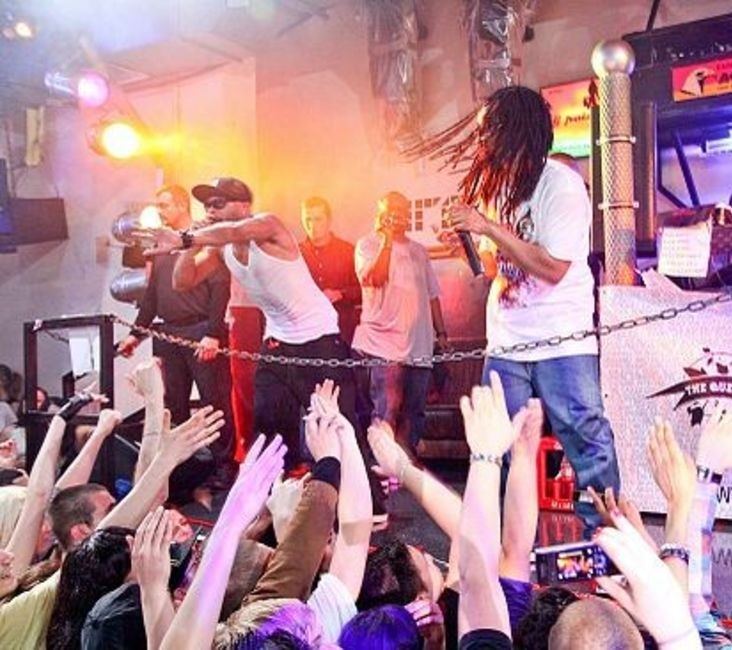
Lil Jon live in a club, 2014: Thomas Nickl, CC BY-SA 3.0
Lil Jon turns up the volume
Long before he was a global hype man, Lil Jon was a working Atlanta DJ and an A&R at Jermaine Dupri's So So Def label. With his group the East Side Boyz he began shaping crunk in the late 1990s, a high-energy club sound built on synthesizer loops, drum-machine claps, booming 808 bass and shouted, chant-along hooks. Their 1997 album Get Crunk, Who U Wit set the tone, and the style was designed for one thing: getting an entire room to yell back.
Crunk had roots in both Memphis and Atlanta clubs, but Lil Jon became its face. His booming, shouted ad-libs became some of the most recognizable sounds in 2000s hip hop.
"Get Low" and "Yeah!" go everywhere
The breakthrough came with "Get Low", a collaboration with Atlanta duo the Ying Yang Twins from the 2002 album Kings of Crunk. Released as a single in 2003, it climbed to No. 2 on the Billboard Hot 100 and proved crunk could rule mainstream radio. The song has never really left: it turned up in films such as Coach Carter and The Proposal, in video games including Dance Central 3, and it is still a party staple today.
The Ying Yang Twins, Kaine and D-Roc, were stars in their own right. Despite their name they are not related, and their party records such as "Salt Shaker" kept clubs moving through the mid-2000s. Their crowd chant "Halftime (Stand Up and Get Crunk)" even became a stadium favorite for the New Orleans Saints.
Then Lil Jon produced Usher's "Yeah!", featuring himself and Ludacris. Released in January 2004, it spent 12 straight weeks at No. 1 on the Hot 100, finished as the top song of 2004 and won a Grammy for Best Rap/Sung Collaboration. Lil Jon called the blend crunk&B, and it opened the door for R&B singers to borrow crunk's thump.
Snap music slows it down
Around 2000, a cooler, lighter sound grew up in Atlanta's Bankhead neighborhood. Snap music stripped beats down to the essentials: deep 808s, hi-hats, simple keyboard melodies and finger snaps where the snare drum would normally be. It left plenty of space for dancers.
Bankhead group Dem Franchize Boyz broke out with "White Tee", signed with So So Def in 2005 and then scored a No. 7 Hot 100 hit with "Lean wit It, Rock wit It". D4L's "Laffy Taffy", produced by K-Rab at Atlanta's PatchWerk Recording Studios, reached No. 1 in January 2006, powered by huge online sales at a time when 99-cent downloads and ringtones were changing the business. Unk's "Walk It Out" followed later that year, reaching No. 10 and becoming a pep-rally staple.
In 2007 Soulja Boy, who had moved to Atlanta at age six before relocating to Mississippi as a teen, took snap straight to the internet. "Crank That (Soulja Boy)" spread through YouTube dance tutorials, spent seven weeks at No. 1 and earned a Grammy nomination for Best Rap Song.
A city that always brings a dance
Crunk and snap cemented an Atlanta habit: hits that come with their own moves. Each song arrived with a step that anyone could learn in a minute, from leaning and rocking to cranking that, and the internet carried those steps around the world. That tradition continued with Migos and the dab and with countless viral dances since.
Crunk faded by the end of the 2000s as trap took over, but Lil Jon found a new audience in 2013 with DJ Snake on "Turn Down for What", now certified 8x platinum. Play any of these songs at a party today and the reaction proves the point: Atlanta's party sounds still work.

- Wikipedia: Crunk
- Wikipedia: Get Low (Lil Jon & the East Side Boyz song)
- Wikipedia: Yeah! (Usher song)
- Wikipedia: Snap music
- Wikipedia: Laffy Taffy (song)
- Wikipedia: Crank That (Soulja Boy)
Facts on this page were checked against these sources.
- Lil Jon live in a club, 2014: Thomas Nickl, CC BY-SA 3.0
- Soulja Boy and dancers on stage, 2008: Andrew Baron, CC BY 2.0
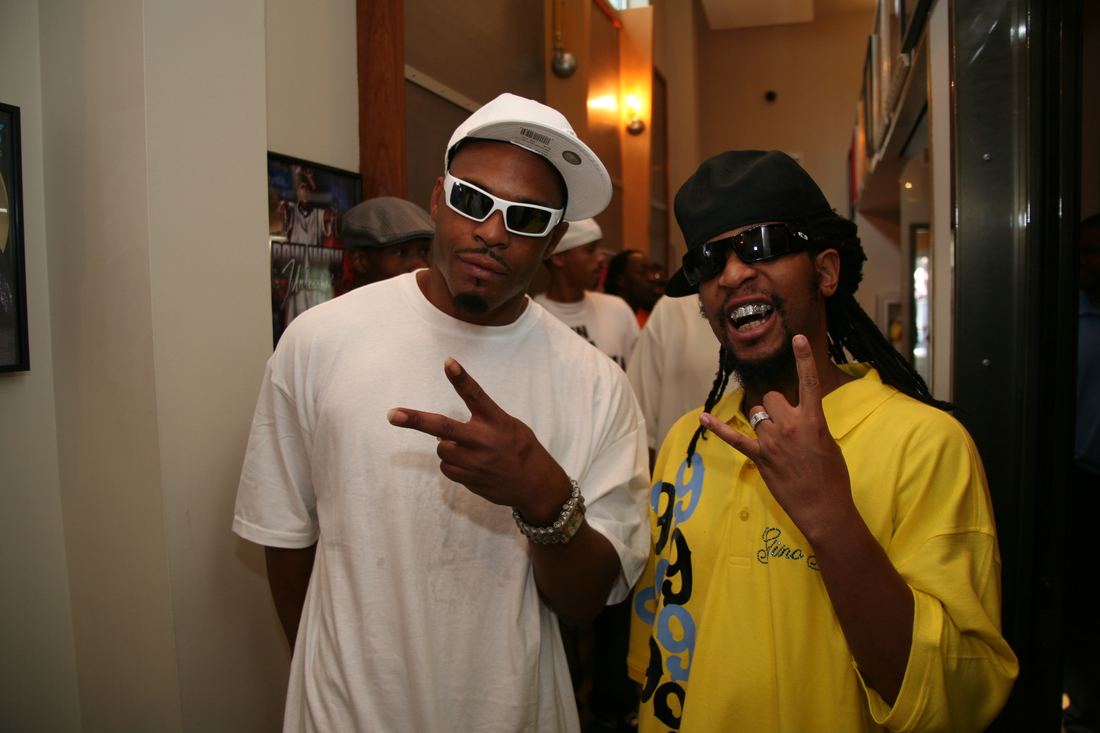
- Fabo of D4L with Lil Jon, 2007: Gamerscore Blog from USA, CC BY-SA 2.0
Text written by ATL Quality.
← Quality Control and Migos: The Label That Shaped Modern Atlanta RapAtlanta Rap Today: The Stars Running the Charts →